Founded by PhDs and leading AI researchers. Request a pilot →

Keep publishing.
Keep the rights.

Companies clear every paper with IP counsel before it goes public. At a university, review happens only when a researcher walks in the door. Patly reads every paper your university publishes, ranks the patentable ones, and drafts the ones you choose. You decide what gets filed. Licensed counsel signs everything, at a flat $5,500 per non‑provisional.

Attorney‑signed · flat per‑filing pricing, no hourly billing · faculty change nothing

Paper → Filing
01

Patly finds the paper Automatic

Preprints, journals, dissertations, and award feeds, screened the day they appear. No disclosure needed.

02

Draft in hours Hours

A filing‑ready non‑provisional from the paper itself: claims, specification, and figures.

03

Attorney signs, Patly files Days

Licensed counsel reviews and signs. Filed inside the 12‑month grace window, priority date locked.

The live queue: papers screened, patentability flagged, candidates ranked. Dollar figures are a triage signal, not an appraisal.

Patly for Get the free report
Your first step costs nothing

Start with a free report from your own papers.

Every engagement starts with a free shortlist report built from a year of your university's published papers: the inventions worth protecting, ranked, with the reasons. You decide what to protect; nothing is drafted or filed without you.

Nothing confidential leaves the university · nothing is drafted or filed without you

Every filing is examined first: read the sample report →

Patent analytics · live

Look your institution up now

Filings, allowance rates and the examiners your researchers draw, from the USPTO prosecution record. Free to start, no account.

Examiners, art units, companies, firms, inventors and technologies. Open Patent analytics →

The examination simulator

Patly Examiner: the office action, before you file

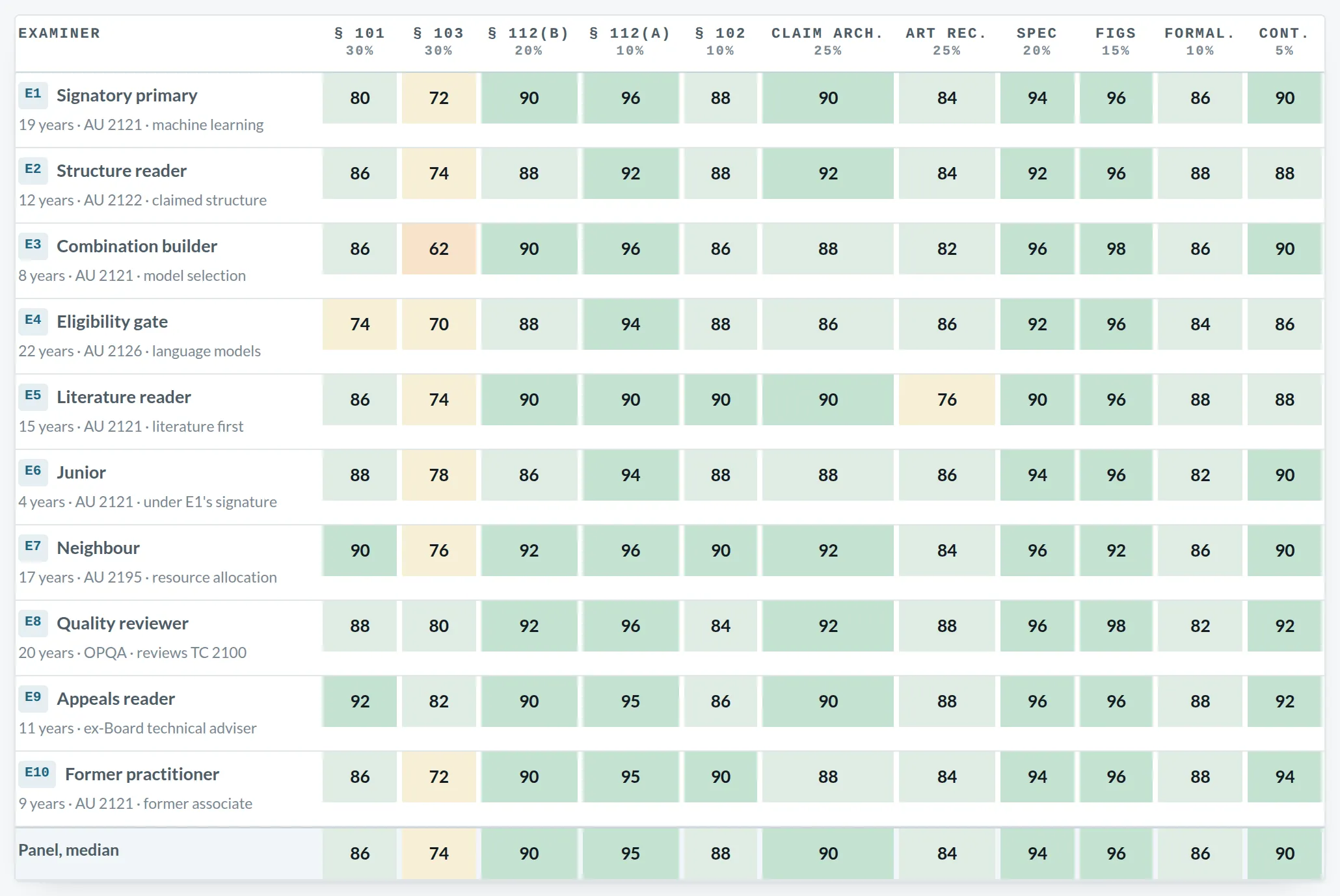
Every application Patly files is examined before it goes out: a simulated panel of ten primary examiners, calibrated to the application's art unit, raises the rejections, cites the art and drafts the responses. Your office can run the same examination on any draft, from any firm.

  • Every rejection, with the art and the answer101, 102, 103 and 112, each with the references behind it and the response drafted.
  • The forecast and the gradeThe prosecution forecast, the RCE risk, the allowance outlook out of 100, and the drafting grade.
  • Back in minutes, per application$349 per application, with no seats. Ask us for a trial code to try it on a matter of your own.
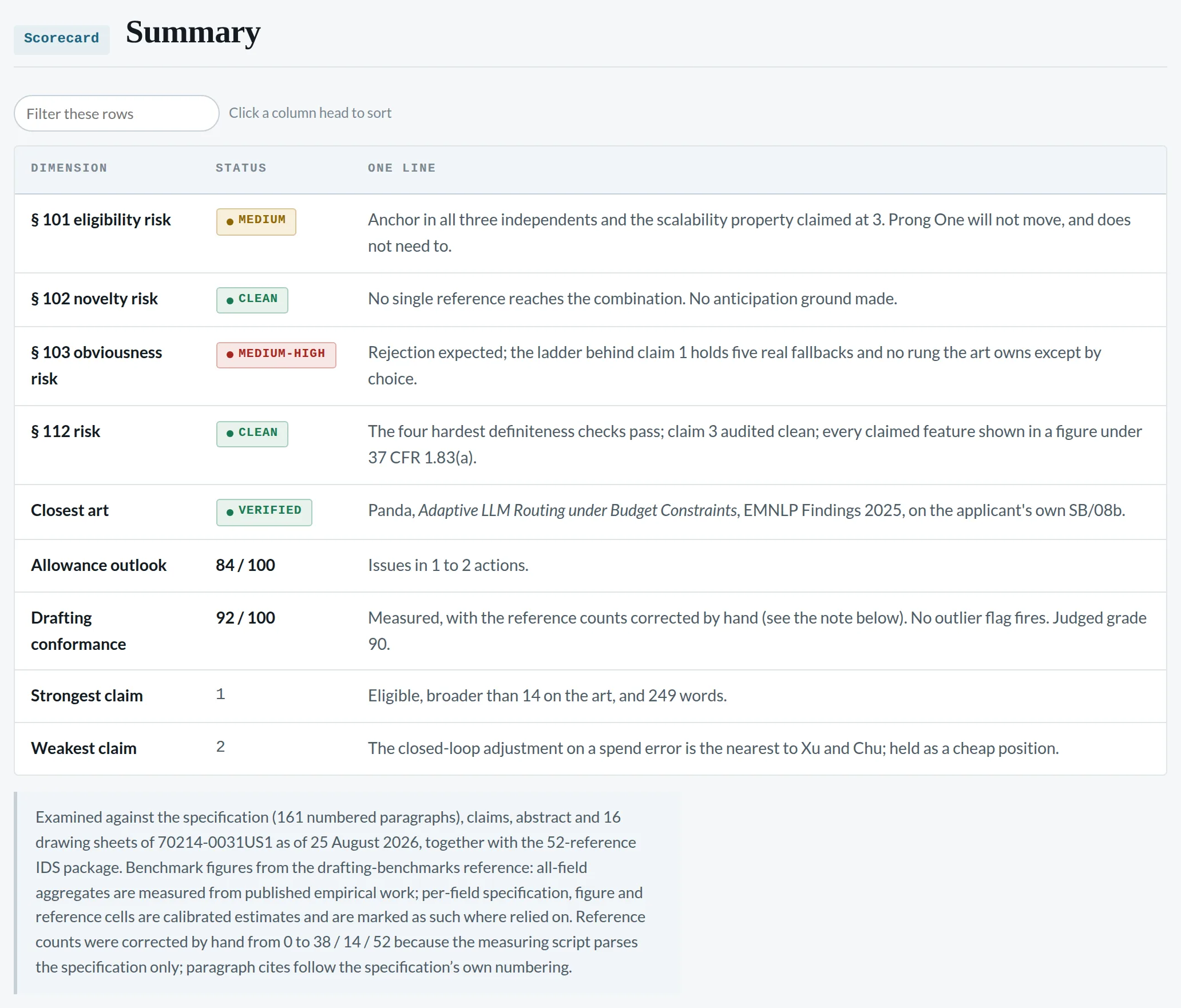
Sample report · summary
The summary that opens the sample examination report: each statutory risk, the closest art, the allowance outlook, the strongest and weakest claims

The summary that opens every report. Read the whole sample →

Who uses it, and what each one reads first

Every use, on the Patly Examiner page →
Who uses Patly Examiner: the question each party brings, the parts of the report they read first, and what it changes for them
WhoThe question they bringWhat they read firstWhat it changes
Before filingRead the office action before the office writes it. 5 uses
Law firms and patent agentsProsecution practices of every size
“Will this survive the first action, and is the answer ready if it does not?” Fix the draft before it is filed, and meet the first action with the response already written.
Individual inventorsFiling on their own, or paying a firm to
“Is this draft worth the filing fees, and does it claim everything it could?” Know where the claims stand before paying to file them, and what to change if they come up thin.
Startups and foundersPatents pending, a round coming
“Will the applications our investors ask about hold up?” Walk into diligence with the likely rejection named and the answer already in the claims.
Universities and research labsTech transfer offices working with outside counsel
“Is the draft outside counsel sent back ready to file?” Send it back with specifics while it is still a draft, not after the first action arrives.
Applicants coming to the USClaims first drafted for another office
“How will a US examiner read claims written for another office?” Adapt the claims for US eligibility and means‑plus‑function reading before the US filing.
Quality and oversightKnow the work is good before anyone signs it. 3 uses
Companies that hire patent firmsIn‑house IP and legal teams
“Is the firm we pay drafting to the standard we pay for?” Measure every firm against the same field benchmarks, and give the next batch to the firm that earns it.
Law firms reviewing their own draftsPartners, before the client reads the draft
“Does this draft meet our standard before the client sees it?” Catch antecedent and support gaps in house, and keep the client who would have found them.
In‑house patent committeesDeciding what to file this quarter
“Which of these drafts are ready, and which need work first?” Rank the pipeline by how likely each draft is to issue, and spend the budget where it holds.
DisputesFind the weak claim before the other side does. 3 uses
Litigation and defense firmsAnswering an asserted patent
“Where is the asserted patent weakest?” Open the invalidity analysis, or an IPR petition, with the closest art charted and the indefinite terms flagged.
Patent owners before they assertPlaintiffs and their counsel
“Which claims will hold once a defendant goes looking for art?” Assert the claims that stand up, and know the fallback positions before the other side finds the weak ones.
Litigation fundersDeciding which patent cases to back
“Is the patent behind this case strong enough to fund?” Screen cases on validity risk before paying for full diligence.
Deals and diligenceDiligence on pending claims, before the term sheet. 3 uses
InvestorsVenture and growth funds
“Will the applications this company counts on actually issue?” See how each pending application is likely to fare before the term sheet, not after the first office action.
Acquirers, buyers and licenseesAcquisitions, portfolio purchases, licenses
“How much of this portfolio is likely to issue as claimed?” Negotiate on the claims likely to survive examination, not on the count of filings.
Insurers and IP lendersPricing risk on a portfolio
“Would these claims hold up under examination?” Underwrite on the strength of the claims, not the number of applications.
Public sector and teachingA consistent first read, at any volume. 2 uses
Patent offices and governmentsOffices facing rising application volumes
“With applications rising, where should examiner time go first?” A first read of every application that names the likely ground and the art behind it, for an examiner to confirm or set aside.
Law schools, clinics and examiner trainingTeaching prosecution
“How do students practice answering a rejection before they have a real one?” Realistic office actions on the students’ own drafts, with a prepared response to compare against.
RejectionsResponsesScoresArt and claimsForecast and panel

Every tag opens that part of the sample report.

Licensed counsel signsLicensed patent counsel reviews and signs every filing Patly makes.
Not a law firmPatly is not a law firm and does not give legal advice. A report or a draft is yours, or your counsel’s, to review.
Your documents stay yoursThey stay in your account, are never used to train a model, and are deleted when you ask.
What changes for universities

Without Patly, and with it

Without PatlyWith Patly
Finding inventionsWhen a researcher walks in the doorEvery paper your university publishes, read and ranked
The cost of a filing$10,000 to $15,000 billed by a firm to draft and file$5,500 flat, signed by licensed counsel
From decision to filingDrafting starts once a disclosure is written upDrafted from the paper itself, filed in days once you approve
The examiner's viewArrives with the first office actionA simulated examination before anything is filed
How it works for universities

Three steps

1 · AUTOMATIC

Patly finds the paper

Preprints, journals, dissertations and award feeds, screened as they appear. No disclosure form, and faculty change nothing.

2 · YOUR CALL

Your office picks

The ranked list arrives with the reasons. You decide what to protect; nothing is drafted or filed without you.

3 · FLAT PRICE

Drafted, examined, filed

A non-provisional drafted from the paper itself, examined, signed by licensed counsel, and filed in days once you approve.

What universities use

Four products, each at a published price

Each one works on its own. Together they take an invention from the first idea to the allowed patent.

Find

Detection and ranking

Every paper your university publishes, read and ranked, with the shortlist routed to your office.

$19,995 a yearOpen →
File

Attorney-signed filing

Drafted from the paper itself, examined, signed by licensed counsel and filed, at one flat price.

$5,500 flatOpen →
Win

Patly Examiner

The office action before filing, with every rejection answered. Run it on any draft, from any firm.

$349 per applicationOpen →
Know

Patent analytics

Allowance rates, difficulty and what works for the examiners and art units your researchers draw.

Free to startOpen →
$5,500
flat per filing, signed by licensed counsel
$10,000 to $15,000
what a firm bills to draft and file one
Free
the first report, from your own papers
Days
from your approval to the filing
Questions universities ask

Common questions

Do our researchers have to do anything?

No. Patly works from what the university already publishes. The ranked list comes to your office, and nothing is drafted or filed without you.

What does a filing cost?

A flat price per non-provisional, drafted from the paper and signed by licensed counsel, with lower prices in prepaid blocks. USPTO filing fees are separate.

Is our research confidential?

Nothing confidential leaves the university. Documents you share stay in your account, are never used to train a model, and are deleted when you ask.

Who signs the filing?

Licensed patent counsel reviews and signs every filing. Patly is not a law firm and does not give legal advice.

Can we pay on an invoice?

Yes. Pay by card on the site, or on an invoice.

Every question, on the FAQ page → · Security and compliance → · Every price →

See what a year of your papers holds

The shortlist of patentable inventions comes back free, ranked, with the reasons.

Or write to info@patly.ai